Technical Training
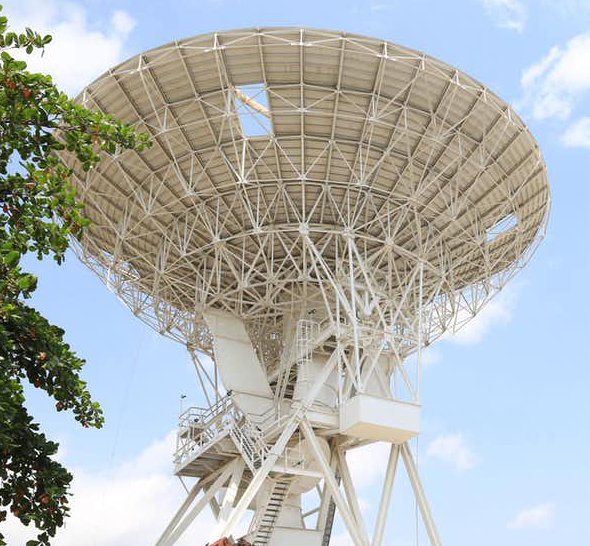
Units 2 and 3 comprise of technical training which takes place either at Hartebeesthoek Radio Astronomy Observatory (HartRAO) in South Africa or at the first converted AVN dish at GSSTI in Ghana. These are combined into a two-week lecture course and are reflected in this repository.
In Technical Training, you will learn about various aspects of a radio telescope such as the astronomical drive and tracking systems, encoders, receiver systems etc.. For VLBI, the details of the local recording system are introduced and the concept of e-VLBI described. The importance of high accuracy timing and frequency standards are discussed along with the role of hydrogen masers and GPS. The local radio frequency interference environment are monitored and mitigations strategies discussed. Throughout this unit there are lectures on elements of radio telescopes and receiver systems, but the main emphasis are be more on hands-on training. The students will learn in small groups by locating, testing and using the various components of the main antenna and receiver systems. A training receiver are available that students can take apart and put back together.
In unit 3, training in observational radio astronomy are taught through a combination of lectures and hands-on experience. Lectures cover single dish and interferometric observations and theories. Astrometric VLBI introduces the concept of parallax, proper motion determination, the International Celestial Reference Frame and geodetic VLBI. Single dish techniques such as position and frequency switching are explored. Instruction are given in flux calibration, polarisation calibration, system temperature measurements and monitoring, and pointing corrections. The DiFX software are available to demonstrate the correlation technique. In addition, Technical Training comprises of exercises on the use of large survey datasets as an introduction to data mining in astronomy.
Courses and materials
Temporary data staging area
This is the temporary data staging area until I get round to this part of the website. The buttons below will allow you to download the tarballs for the Units2/3 materials from Ghana and HartRAO.