21–25 September 2026 · Diani, Kenya

Invited Speakers

Meet the researchers giving the review and plenary talks at AGN on the Beach II.

Review & plenary speakers

Six invited talks anchor the scientific programme across the week.

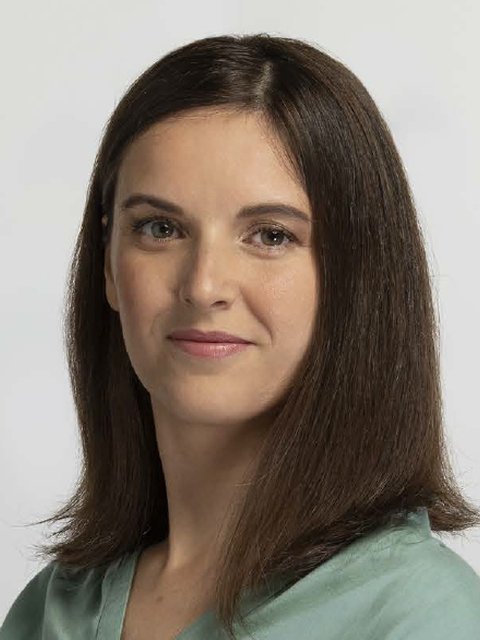
Photo of Raffaella Morganti

Prof. Raffaella Morganti

ASTRON & Kapteyn Astronomical Institute, University of Groningen

Raffaella Morganti is an astronomer investigating what makes super-massive black holes at the centre of galaxies turn into active nuclei (AGN) and how the enormous energy they release can influence the evolution of the host galaxy. She is particularly focused on the study of AGN at radio wavelengths and on the properties of the cold gas (atomic neutral and molecular): the interplay between the radio plasma and the cold gas is a central topic of her research. She does this by using a variety of radio telescopes, from LOFAR to ALMA.

Her career started with a PhD at the University of Bologna (Italy), followed by an ESO Fellowship. She has worked at the Institute of Radio Astronomy (Bologna) and the Australia Telescope National Facility before landing at the Netherlands Institute for Radio Astronomy (ASTRON), where she was Head of the Astronomy Group for eight years. In 2013 she received an ERC Advanced Grant to explore the role of radio-loud active galactic nuclei in galaxy evolution. For her work she has also received the knighthood of "Commander in the Order of the Star of Italy".

She is affiliated as emeritus at the Netherlands Institute for Radio Astronomy (ASTRON) and at the Kapteyn Institute, University of Groningen.

Talk title & abstract

Exploring the impact of radio AGN on galactic scales by tracing different phases of the gas

A variety of results obtained in recent years are suggesting that not only the presence of gas outflows is a signature of the impact of the energy released by the active SMBH, but also the physical conditions of the gas in the central (kpc-scale) regions of galaxies can be used to trace such impact. These effects have been seen in gas observed around both high- and low-luminosity AGN. In this talk I will summarise some of the results obtained for a range of phases of the gas, from hot gas traced by X-ray observations to warm and cold molecular gas. The results from ALMA/NOEMA and, more recently, JWST are expanding this field as we speak! I will focus in particular on the impact of (young) radio jets: while expanding in the ISM they can create a cocoon of shocked gas which can explain e.g. the extreme line ratios seen in the cold molecular gas, shocked gas at the origin of LINER spectra, outflows and extended X-ray emission in the direction perpendicular to the jets. These are all relevant signatures of how the AGN impacts the properties of the ISM in the host galaxy. Interestingly, although the radio plasma and the cold molecular gas are clearly coupled, the kinetic energy that is transferred to the interstellar medium can be just a small fraction of the energy available from the AGN. The implications of this will be discussed. If time allows, I will present the case of 3C84 (NGC1275) as an example of connecting and closing the feeding and feedback loop, while helping build a circumnuclear stellar disc.
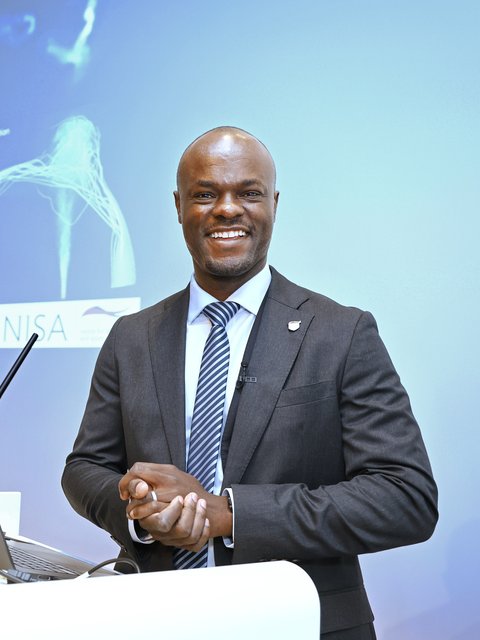

Photo of James Chibueze

Prof. James Chibueze

University of South Africa · Head, UNISA Centre for Astrophysics and Space Sciences

James Chibueze is a Distinguished Professor of Astrophysics at the University of South Africa and the Head of the UNISA Centre for Astrophysics and Space Sciences. He completed his BSc Hons (First Class) in Physics and MSc in Astrophysics at the University of Nigeria and his PhD at Kagoshima University, Kagoshima, Japan.

He is one of the Vice Presidents of the International Astronomical Union (IAU), a member of the Science Committee of the African Astronomical Society (AfAS), and an international member of the UK enhanced Multi Element Remotely Linked Interferometer Network (e-MERLIN) steering committee. His science interests include, but are not limited to, Galactic star formation, VLBI astrometry with masers, radio galaxies, galaxy clusters, FRBs, and high-fidelity imaging with sensitive radio interferometers (ALMA, VLA, MeerKAT).

Talk title and abstract to follow.

Photo of Stas Shabala

Prof. Stas Shabala

University of Tasmania

Professor Stas Shabala is a theoretical astrophysicist at the University of Tasmania, where he leads the Theoretical and Computational Astrophysics group and serves as Associate Head Research in the School of Natural Sciences. His research focuses on how galaxies and supermassive black holes evolve together, with a focus on powerful plasma jets launched by active galactic nuclei. His group uses analytical models, supercomputer simulations, and radio telescope observations to understand how these jets shape galaxies, and how they can be used for precision measurements of Earth from space.

Stas completed his PhD at the University of Cambridge and held research fellowships at Oxford and in Australia before joining the University of Tasmania as faculty. He is the immediate past President of the Astronomical Society of Australia, a former Editor-in-Chief of Publications of the Astronomical Society of Australia, and has worked as a science policy adviser at the Office of Australia's Chief Scientist. He is an experienced university physics teacher, and an advocate for science education and the role of science in society.

Talk title & abstract

Radio source morphology and feedback across scales: a theoretical perspective

Radio jets on parsec scales are highly relativistic, magnetised flows, yet their observed morphologies on galactic to circumgalactic scales are varied, shaped by a complex interplay between jet power, age, stability, and environment. In this review talk I will outline the theoretical considerations needed to interpret the diverse morphologies of jetted AGN across scales. I will discuss how a synthesis of analytical models and numerical simulations enables a connection between intrinsic jet and environment properties, and observable radio structures and spectra. A recurring theme will be that both radio morphology and the resultant feedback are not set by jet kinetic power alone: how the jets are injected, and into what kind of medium, are critical. For example, powerful jets in poor environments can continue to drive substantial feedback long after the active phase has ended, making remnant phases an important part of the feedback cycle. I will briefly highlight the additional complications introduced by dynamic environments, including the relative motion between jets and ambient gas — a key ingredient for the formation of bent radio sources. High-resolution observations that combine source morphology with spatially resolved radio spectra offer a promising route to disentangling jet and environment parameters, a long-standing challenge in interpreting radio AGN populations. I will conclude by discussing where models need to go next. While current theory gives a useful description of radio source evolution on scales of tens to hundreds of kpc, substantial work remains either side of these length scales. On galactic scales, jet interactions with the multiphase interstellar medium set radio source morphology, while whether any early asymmetries persist to larger scales depends strongly on the properties of the circumgalactic medium. On the largest scales, giant radio galaxies challenge both analytical and numerical approaches. Models that include the full jet duty cycle — multiple generations of jets in both active and remnant phases — are likely to be an essential ingredient to understanding the largest jets.

Photo of Kristina Nyland

Dr. Kristina Nyland

U.S. Naval Observatory

Dr. Kristina Nyland is a senior radio astronomer at the U.S. Naval Observatory (USNO) in Washington, DC. Her research uses radio-frequency observations to study distant galaxies and supermassive black holes, with a particular focus on how relativistic jets influence galaxy evolution. She works extensively with radio facilities such as the Very Large Array and the Very Long Baseline Array.

Dr. Nyland received her PhD from New Mexico Tech in 2015. She subsequently held postdoctoral positions at ASTRON, the Netherlands Institute for Radio Astronomy, and at the National Radio Astronomy Observatory in Charlottesville, Virginia. From 2018 to 2021, she was a National Research Council postdoctoral fellow at the Naval Research Laboratory (NRL). In 2021, she was awarded the Jerome and Isabella Karle Distinguished Scholar Fellowship, leading to her appointment as a permanent-track scientist at NRL. In 2026, Dr. Nyland transitioned to a permanent-track astronomy position at the U.S. Naval Observatory in the Radio Optical Reference Frame Division.

Talk title & abstract

The Dynamic Lives of Radio AGN: New Insights from Modern Surveys

Radio jets launched by active galactic nuclei (AGN) play a fundamental role in shaping the evolution of galaxies. Understanding how radio jets are triggered, evolve, and switch on and off over cosmic time requires identifying AGN during the earliest stages of jet formation and reconstructing their full life cycles. Until recently, however, young radio AGN and episodic jet activity have been difficult to identify unambiguously because of observational limitations. In this talk, I will present new approaches for identifying young and compact radio AGN using modern radio surveys that combine wide-area sky coverage, broadband frequency coverage, high angular resolution, and multi-epoch observations. I will show how the Very Large Array Sky Survey (VLASS) is providing a new time-domain view of radio AGN by revealing recently triggered, rapidly evolving, and short-lived radio jets. By combining VLASS with complementary low-frequency observations from the LOFAR Two-metre Sky Survey (LoTSS), it is possible to identify newborn quasar jets embedded within relic emission from previous episodes of activity, providing new insights into recurrent jet activity and AGN duty cycles. I will also highlight recent multiwavelength follow-up observations and discuss how next-generation radio and multiwavelength surveys will further advance our understanding of AGN variability, jet evolution, and feedback.

Photo of Eun-jin Shin

Dr. Eun-jin Shin

Kavli Institute for Cosmology, University of Cambridge

Eun-jin Shin is a postdoctoral researcher at the Kavli Institute for Cosmology, University of Cambridge. She received her PhD in Astronomy from Seoul National University. Her research focuses on galaxy evolution and the growth of massive black holes in galaxies. She uses high-resolution numerical simulations to study how gas is transported from galactic scales to accretion-disc scales, and how relativistic jets influence their host galaxies from the central parsecs to the circumgalactic medium.

Talk title & abstract

Multiscale coupling between black hole accretion, stellar feedback, and multiphase gas in AGN jet feedback

Active galactic nuclei (AGN) jets can exert powerful effects across the multiphase interstellar medium (ISM), circumgalactic medium (CGM), and galaxy-scale gas cycles. At the same time, the jets themselves are determined by small-scale physics near the black hole, including gas accretion, black hole spin, and magnetic flux, all of which may in turn be strongly influenced by stellar and AGN feedback. Understanding AGN jet feedback therefore requires a multiscale perspective that connects the supply of gas to the black hole and the launching of jets with the response of the surrounding gas. In this review talk, I will first examine how gas inflow, angular momentum transport, and the structure of the nuclear environment regulate black hole feeding and jet launching. I will then follow the propagation of jets through circumnuclear disks, the multiphase ISM, and the CGM, focusing on how jet-driven shocks, cocoons, turbulence, heating, and gas compression reshape the thermal and dynamical state and density structure of the ISM and CGM. In turn, I will discuss how jets respond to and interact with these multiphase environments, as well as how they affect star formation in circumnuclear and galactic disks. Finally, I will discuss what these results imply for the role of jets in regulating black hole growth and host-galaxy evolution, while highlighting the main theoretical and observational uncertainties.

Photo of Marisa Brienza

Dr. Marisa Brienza

Istituto Nazionale di Astrofisica (INAF), Bologna

Marisa Brienza is a researcher at the INAF Institute for Radio Astronomy in Bologna. Her research focuses on the life cycle of jets produced by supermassive black holes and their impact on galaxies and the surrounding intergalactic medium. She is also an expert in the study of the evolution of the old remnant plasma left behind by these jets, how this plasma interacts with the intragroup and intracluster medium, and the origin of associated filamentary non-thermal emission recently discovered.

Her work relies on low-frequency radio observations from major international facilities and SKA precursors and pathfinders, including LOFAR, JVLA, uGMRT, MeerKAT, and ASKAP. Additionally, she is an active member of several international radio survey collaborations, such as LoTSS, MIGHTEE, EMU, and the EDF-S and EDF-N radio surveys.

Talk title & abstract

Tracing the life cycle of AGN jets in the SKA era

Jets in active galactic nuclei are episodic in nature, cycling through periods of activity and quiescence. Understanding their duty cycle is essential for quantifying the cumulative energy they inject into their host galaxies and the surrounding environment, a key ingredient in models of galaxy evolution. However, measuring the jet duty cycle and determining how it depends on host galaxy properties, source type, or environment remain significant challenges. In this talk, I will discuss the methods used to investigate the jet duty cycle and to identify sources at different stages of the jet life cycle. In particular, I will present recent progress in the field enabled by the new generation of radio observations below ~1 GHz, which are especially sensitive to the oldest detectable radio plasma. I will then conclude by highlighting the opportunities that the Square Kilometre Array will bring to this field.

Photo of Melvin Hoare

Prof. Melvin Hoare

University of Leeds · Development in Africa with Radio Astronomy (DARA)

Melvin Hoare is a professor of astrophysics at the University of Leeds, UK. His research has primarily been on the formation of massive stars, where he has used observations across the spectrum but has recently concentrated on radio studies. He led the CORNISH 5 GHz radio continuum surveys of the Galactic plane that delivered arcsecond images of a wide range of phenomena. During the development of the Square Kilometre Array radio telescope he was active on their Science Working Group.

In recent years he has led the Development in Africa with Radio Astronomy (DARA) project, which provides skills training to a first generation of radio astronomers in the African SKA partner countries. Working with partners from the space industry and AI experts, DARA aims to position its trainees to contribute to the economic development of Africa.

Talk title & abstract (Plenary)

The Development in Africa with Radio Astronomy (DARA) Project

I will review the work of the DARA project that has delivered basic training in the skills associated with radio astronomy to over 500 graduates from the African SKA partner countries, including Kenya. The training includes hands-on training in radio techniques at radio observatories in South Africa and Ghana, and was recently extended to incorporate optical astronomy training at a site in northern Kenya. Trainees also gain skills in Linux, Python, and radio astronomy data reduction. Our industrial partners from the space sector showcase how such skills can be transferred into other areas such as satellite communications and remote sensing, as well as encouraging entrepreneurship. In parallel, the DARA Big Data project has trained a similar number of people in ML/AI skills via hackathons and workshops that emphasise the synergies between astronomical, Earth observation, and medical imaging applications. The DARA advanced training programme has supported over 70 Masters places and 27 PhDs, as well as 13 postdocs, in African institutions, with the aim of establishing radio astronomy groups ready to utilise and contribute to the SKA.

Mini-invited talks

Additional invited contributions selected by the SOC from the community.

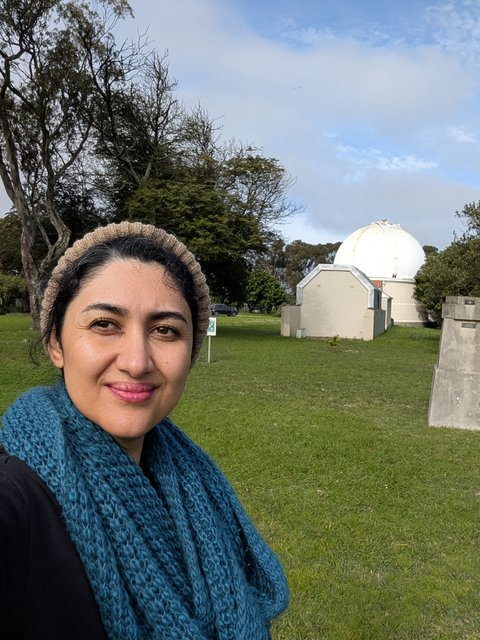
Photo of Narges Hatamkhani

Dr. Narges Hatamkhani

South African Astronomical Observatory (SAAO)

Dr. Narges Hatamkhani is a Postdoctoral Research Fellow at the South African Astronomical Observatory (SAAO), where she studies the interplay between supermassive black holes, galaxies, and their environments. Her research combines optical spectroscopy, radio continuum surveys, infrared observations, and spectral energy distribution modelling to understand AGN fuelling and feedback in galaxy clusters. She has led observational studies of brightest cluster galaxies using SALT, MeerKAT, and ASKAP, and serves as PI and Co-I on several SALT observing programmes. Dr. Hatamkhani is a member of the MIGHTEE and BEAMS collaborations, with research spanning galaxy evolution, AGN physics, and large-scale structure in preparation for the SKA era.

Talk title & abstract

Environmental Constraints on Radio-Mode AGN Feedback in Cluster Cores

We investigate the environmental drivers of radio-mode AGN feedback in 171 brightest cluster galaxies (BCGs) residing in Sunyaev–Zel'dovich-selected galaxy clusters over 0.3<z<0.8, providing a representative view of AGN activity in massive environments. Combining SALT spectroscopy, ASKAP/RACS radio observations, WISE mid-infrared photometry, and multiwavelength SED modelling, we examine the prevalence, accretion state, and environmental dependence of radio-loud AGN. We find that 22% of BCGs host radio-loud AGN, almost all of which are low-excitation, low-Eddington-ratio systems, indicating that maintenance-mode feedback was already widespread at intermediate redshift. While accretion efficiency increases with redshift, neither radio luminosity nor AGN properties show significant dependence on cluster mass or dynamical state. Our results support a picture in which the triggering of radio-mode AGN is governed primarily by local accretion processes, while the global cluster environment has only a limited influence. This provides new observational constraints on the conditions under which jet-driven feedback operates in cluster cores, linking black hole fuelling on nuclear scales to the properties of the surrounding intracluster medium.

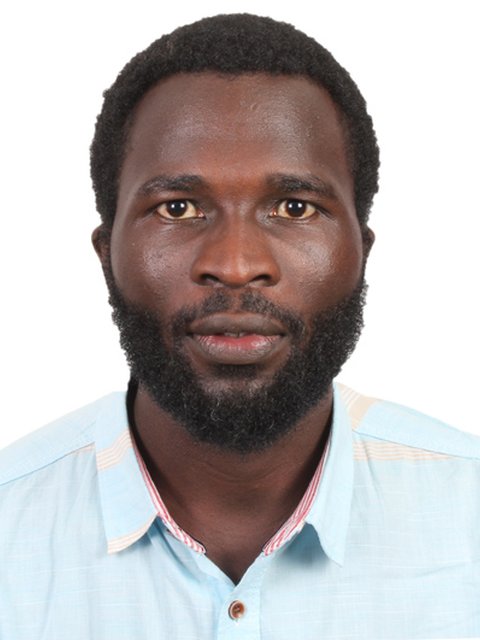
Photo of Geoffrey Ong'alo

Geoffrey Ong'alo

Technical University of Kenya (TUK) · PhD Candidate

Geoffrey Ong'alo is a PhD candidate at the Technical University of Kenya (TUK). His research focuses on the complex interactions between radio-loud AGN and their environments, specifically investigating filamentary synchrotron structures, galaxy cluster evolution, and broadband radio continuum spectra. Using high-resolution data from the LOFAR Two-Metre Sky Survey and multi-wavelength archival data, he aims to constrain the physical mechanisms — such as magnetic draping and turbulent gas motions — that dictate the formation and stability of synchrotron filaments. His current work emphasises the utility of these features as probes of intracluster magnetic field topology and long-term AGN feedback.

Talk title & abstract

Probing the Intracluster Medium: The Rarity and Stability of Synchrotron Filaments in Radio Galaxies

The complex interplay between active galactic nuclei (AGN) jets and the intracluster medium (ICM) remains a pivotal area of study for understanding galaxy cluster evolution. In this work, I present an investigation of narrow, collimated synchrotron filaments — rare structures that extend from radio lobes into the surrounding ICM. Using deep 144 MHz observations from the LOFAR Two-Metre Sky Survey (LoTSS) combined with archival ROSAT X-ray data, we identify a sample of 12 candidate sources displaying these distinct filamentary features. Our analysis suggests that these filaments are not merely stochastic fluctuations but are likely maintained by external confinement, with equipartition pressures consistently lower than the ambient thermal pressures derived from X-ray observations. I will discuss the implications of these findings for magnetic field topology, the role of environmental factors in filament stability, and what these structures reveal about the broader life cycle of radio galaxies and AGN feedback.

More invited speaker details will be added here as they are confirmed.