NASA Nancy Grace Roman Space Telescope
Sole ESA-appointed scientist to Roman's Galactic Bulge Time Domain Survey; leading exoplanet demographics for the transit science team.
Read moreI use the gravitational lensing and transit methods, along with space telescopes, to map planetary systems across the Milky Way — and to build a predictive picture of where planets form, how their architectures change, and how our own neighbourhood fits into the wider Galaxy.
Roman and Euclid are opening a view of planetary systems far beyond the Solar neighbourhood. My work connects their discoveries with models of the Milky Way, turning detections from different techniques into a coherent account of where planets form, how often they occur and how populations change with Galactic environment.
Sole ESA-appointed scientist to Roman's Galactic Bulge Time Domain Survey; leading exoplanet demographics for the transit science team.
Read moreLed the Euclid Exoplanet Science Working Group and pushed the science case for coordinated Euclid–Roman observations of the Galactic bulge.
Read moreThe first space-based survey for planetary microlensing — candidate free-floating Earth-mass planets and the first confirmed space-lensing planet.
See the animated modelThe Manchester–Besançon Microlensing Simulator — a calibrated Galactic model used by ESA and NASA teams for survey design.
Read moreAn automated approach to detecting and characterising exoplanet atmospheres through multi-colour transit observations.
Read moreA game-theory strategy for the search for extraterrestrial intelligence: look where they could already see us.
Read moreMicrolensing, transits and Galactic modelling describe different parts of the same planetary population. My research brings those views together: placing planets within a model of their host stars and the Milky Way, predicting what each survey should detect, and using the observations to reveal how planetary systems vary across the Galaxy.
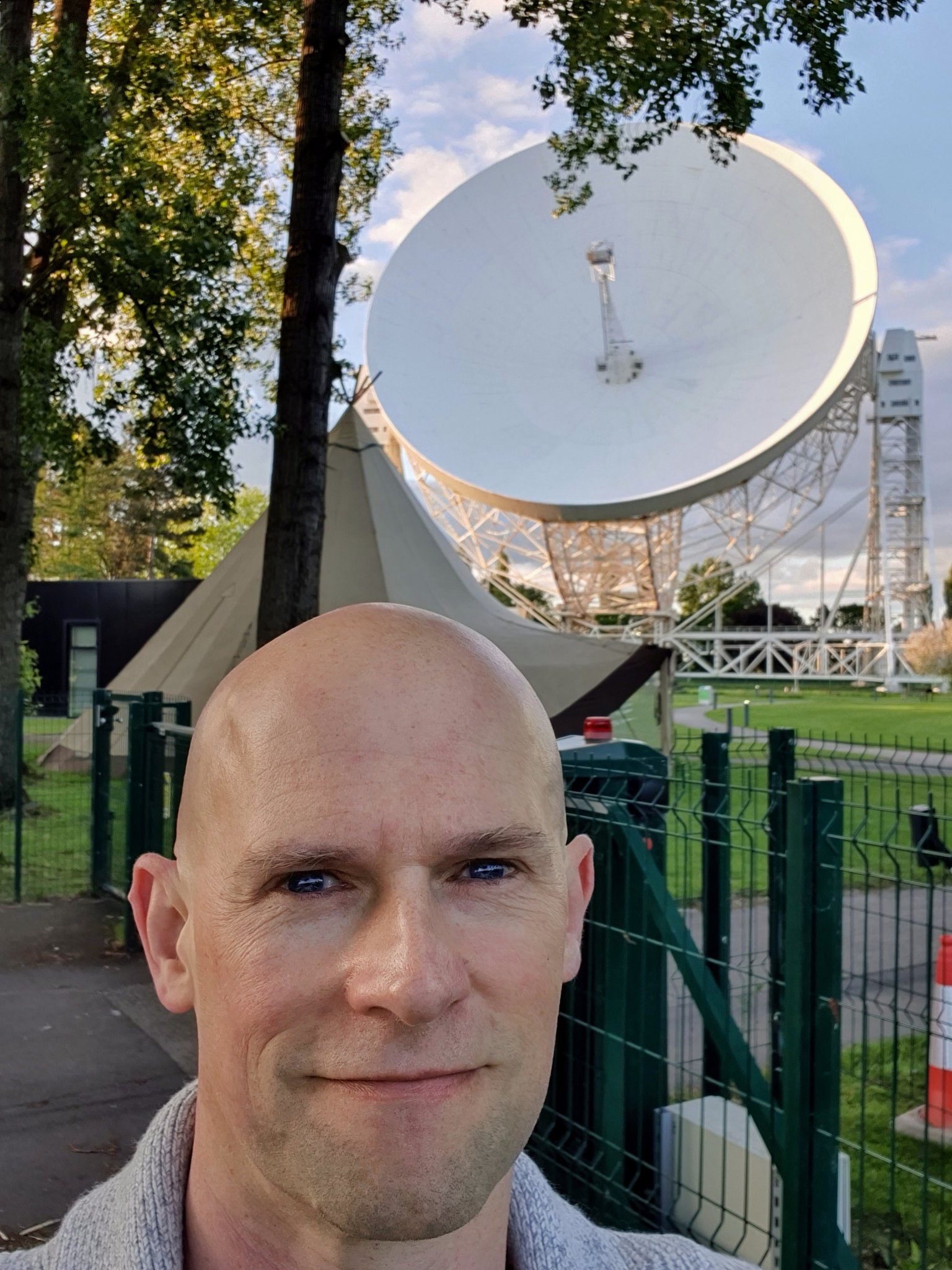
Since 2022 I've been a regular guest on the BBC Breakfast sofa — from the first James Webb images to the Artemis II crew's return from the Moon — alongside BBC Radio 5 Live, BBC World Service, BBC News and national print media.
Journalists: I'm available for live and recorded comment on exoplanets, the search for life, space missions and human spaceflight. Email Eamonn.Kerins@manchester.ac.uk — or see topics I cover.